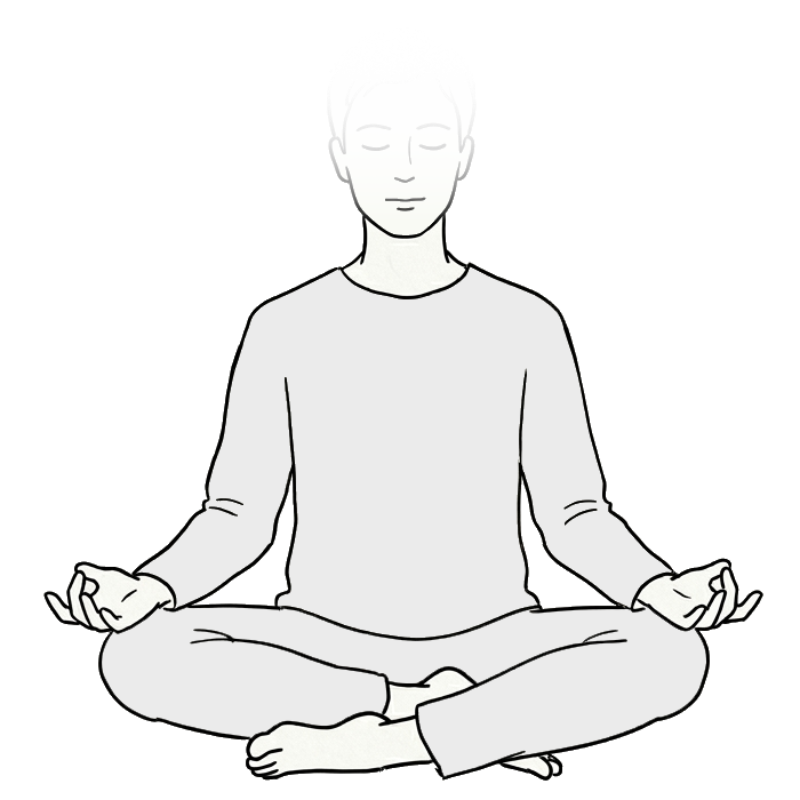
This second lesson goes into awareness a little deeper. Before you read this, though, be sure to read the first one. Read it in a way that gives you an experience of your own awareness rather than intellectual ideas about awareness. This is important, because if you aren't experiencing what is presented here, this material just goes into your intellectual mind and loads it up with more things to think about. This isn't what we are trying to accomplish.
What is the experience we are trying to get from the first lesson? It is simply your own experience of awareness itself.
Important: with Naked Awareness, awareness is not defined by what you are aware of. That is to say, no matter what you are aware of, awareness itself is the same. The ability is the same, but the content may be different. This is an important distinction. We are still aware when we aren't in a special state. Naked Awareness points out that awareness is the thing that supports all experiences.
Pure Awareness 1
Pure awareness, as we mean it here, is a simple thoughtless awareness of something. It is a form of emptiness, with just simple observation at the core. People often think that one can’t observe something without thinking thoughts about it. That’s not true. In fact, it is a valuable skill to have. However, it may take a bit of practice to be able to do it effortlessly.
A Practice
Go where you go to meditate and sit. Put your attention on something, like a small physical object. Keep your attention steadily on the object for a minute or two.
Let go of any thoughts about the object. That is:
- Don’t analyze the object
- Don’t try to notice its attributes.
- Don’t think of its past, present, or future.
- Don’t think about the meaning or significance of the object.
Go for being just purely aware of the object without thinking any thoughts about it. Work on being able to do this for a few seconds, a few minutes, or longer.
Pure Awareness 2
Once you have experiences of pure awareness, see if you can grasp the essence of awareness that is independent of what you are currently aware of. This is a core practice of Naked Awareness. We detach awareness from what it is aware of and become aware of awareness itself.
A Practice
Go where you go to meditate and sit. Put your attention on something, like a small physical object. Keep your attention steadily on the object for a minute or two, until you have some measure of pure awareness. Then detach your attention from the object and see if you can put it on the awareness itself.
Go for being directly aware of awareness itself. Any amount of awareness of awareness, even just an inkling, is valuable.
When you do the awareness practices by yourself, begin with short, relaxed contemplations. Just pick an object, focus on it, and then see if you can isolate the awareness from what it is aware of. You can try to do it for just a minute or two at a time, or you can become absorbed in the process and do it longer. However, in the beginning, it is more important to be able to become aware of your awareness quickly and easily than to try to go really deep (whatever that means).
Awareness that is just aware of itself is "pure awareness" since it isn't about anything or of anything. It is empty of conceptual content. At the instant awareness is aware only of itself, there is no awareness of the world, or of mental thoughts or pictures, or anything else. We call it "Naked Awareness" since it isn’t wearing any concepts, beliefs, attitudes, memories, intentions or other coverings. It is un-complex, like empty space. As awareness of awareness deepens, it becomes evident that it is clear, luminous and liberated. It is filled with presence and a primordial knowing. We practice being aware of awareness until we can touch the nature of awareness directly. (You shouldn’t just take my word for what naked awareness is like! Naked Awareness isn’t a belief system.)
In Naked Awareness, we don't usually have a goal to maintain a state of pure awareness for long periods of time, but to know of it and to have easy, ready access to that emptiness. To develop this, it is sufficient to just have brief experiences over and over. I think being able to be pretty stable with it for a minute or two at a time is all we need to do at first. Over time, it grows naturally into a "base" from which one can experience all events and meanings.
Some people may want to go very deep with pure awareness of awareness. This would mean going into a pure state in which there is no consciousness of the world or anything else at all, just pure awareness directly knowing itself, and maintaining that for long periods of time. In Yoga, this is called samadhi. You will know if that calls to you. For most people, however, just having easy access to that awareness is enough.
One important thing for you to know, if going for a very deep pure awareness of awareness experience, is that it actually isn’t “awareness of awareness.” That’s a bit of a misnomer because it can seem to imply that this one bit of awareness is aware of that other bit of awareness (subject—object). If you are thinking “awareness of something,” it can make you imagine that “awareness of awareness” is a kind of “awareness of something,” but it is not. “Pure awareness aware only of itself” really means a single thing, like a candle flame lighting itself. It is just experiencing the fact of the brightness itself.
Practicing Using the Dyad
You can do the Naked Awareness practices in a Dyad. A Dyad is a two-person meditation technique that combines contemplation and communication. We have found that the combination of contemplation, communication and open listening by a partner is very powerful.
In the Dyad, we use an instruction instead of a question. For example, for the question “How do I know that I am aware?” the listener gives the instruction in the form of a request, “Tell me how you know you are aware.” Another excellent instruction is, simply, "Detach awareness from what it is aware of and be aware of awareness itself." For this instruction, the active partner focuses on a physical object. Later you can use a mental picture, a sound, or another individual (anything you can put your attention on).
The Dyad is particularly helpful for many reasons. Having a listening partner keeps you focused, and it gives you the opportunity to communicate your experiences. Communicating clears the ideas from the mind that naturally arise when you introspect, allowing you to go deeper. The Dyad is also enjoyable because of the deep contact you can make with your partner.
For additional information about Naked Awareness Dyads, see Naked Awareness Practice Dyads.
And for a thorough description of Dyads, go to the Sandoth Dyads section. Just click the Dyads link at the top of the page.
Attributes of Awareness
You could think of it this way: you can use your ability to discriminate, seeing the difference between awareness itself and whatever you are currently aware of. To do this, you have to let go of the connection with the thing you are being aware of and realize the faculty of awareness itself. You may realize that awareness itself is empty, clear, vast, spacious, luminous, present, and knowing. When awareness is very empty, no “self” marks it.
Awareness is what gets filled with experiences. When awareness is filled with experiences, for instance, any conscious state triggered by the senses or by thoughts, the experiences usually obscure the underlying pure field of awareness. The field of awareness is where subjective experiences occur for you. Because we are ignorant of the capacity to be empty (pure awareness being aware of itself), we are likely to become totally wrapped up in the experiences. We get so wrapped up and identified with these conditions that we have no inkling of the awesome miracle of awareness itself. Naked Awareness practices work to re-connect us with the essence of awareness. In so doing, it helps us to be liberated from the binding nature of mental and emotional phenomena.
Remember, though, that Naked Awareness is not really about these ideas, about awareness or liberation, but about having the direct experiences. That is, it does us little good to just think about this. We need to catch awareness itself in the act of being aware.
So, in summary:
- Discriminate between awareness and what you are aware of.
- You can develop the ability to experience pure awareness.
- Over time, pure awareness can become your base for experiencing.
This completes the second lesson. We'll keep going, getting this thing clearer and clearer and clearer. Continue with the next lesson.
Dedication to All Beings
If you wish, take a moment now to dedicate any improvement or benefit you got from this lesson to all beings. Do this with an open heart.