The first thing to understand is what we mean by "awareness of awareness."
The first thing you do is become a little more aware of your own awareness.
A lot of people I've talked to don't quite get what it means to be aware, at least at first. When I asked them, "Are you aware?" some were not sure of what I was asking, so we need to be very clear about this.
First of all, I don't mean some high super-cosmic state or anything like that. I mean your ordinary awareness that you have right now and use every day while doing regular things.
We are aware when we are awake, aware when we are daydreaming, and also aware when we are asleep and dreaming. When we are awake, we are aware of the information from our senses. We are also aware internally of our thoughts and feelings. When we are daydreaming, we are aware of pictures in our minds (and aren't very aware of the world around us). When we are asleep, we are often aware of dreams, as if we are in a different world.
If you are in the 4th stage of sleep (called "oblivion"), then perhaps you aren't aware (though maybe it is just a very forgetful stage of sleep). Also, if you are really zonked-out with an anesthetic during an operation and you have no sense of what is happening around you and retain no memory of what happened while you were out, then that is generally thought of as "not being aware." When you again become aware, you look back and it's like a piece of the memory movie was cut out and the ends spliced together. There’s a gap in which you were not aware.
If you sit with your eyes closed and think about what you had for dinner, you are being aware of a memory stored in your mind. When you are watching TV, you are being aware of the images being presented on the screen. If your eyes are closed and you just see black, you are still aware. You are aware of a black field. If there was no awareness, you wouldn’t have an experience of an ongoing blackness. There would just be absolutely nothing, a gap in time.
If you sit there and decide that you are not aware and you know you thought that thought, then you really are aware and so your thought is just wrong.
Some people think that if you aren't in touch with important things then you aren't aware. For example, if you aren't concerned about ecology or poverty or feel compassion for someone in trouble, then you are unaware. Or maybe you think that if you aren't in some high, cosmic consciousness state, you aren't aware. But what that says is that you aren't being aware of something in particular. That doesn't mean you aren't aware. Being aware of junk is still being aware.
Important: Awareness is not defined by what you are aware of, but by the nature of awareness itself. This is a key distinction. You should reflect on this until it is very clear.
The common denominator of all experiences (that you identify as being your experience) is awareness. It is that basic faculty that we have that illuminates sensory information and inner states. It is “the way it is for you.”
So now, do you know what I mean by awareness or being aware? If you read this, and know you read this, that is you being aware.
So the next big question is, "How do you know you are aware?" If someone asked you, “Are you aware?” you could notice your awareness and answer, “Yes.” You can tell by just noticing. We could say it is self-evident.
Noticing your own awareness is called "awareness of awareness."
A Practice
Consider the question, “How do you know you are aware?” See if you can dig into that. It is not so important that you get an answer, but that you observe the process of becoming more aware of your awareness.
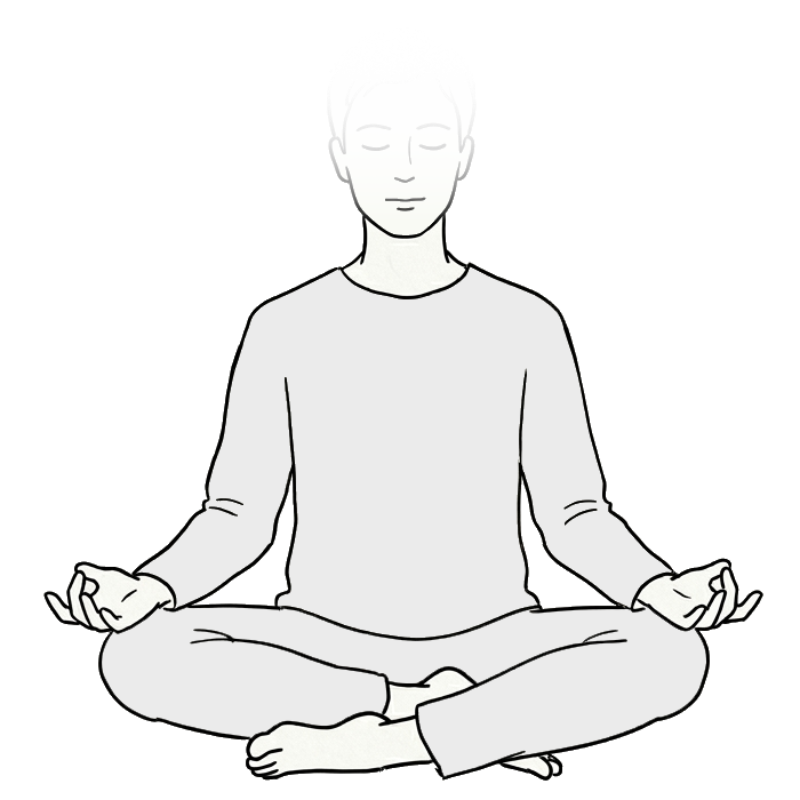
Sit in meditation and see what comes up for you as you inquire into this question: “What happens at the instant that I become aware that I am aware?”
A Note on the Practices
I recommend writing down the results of the practice. Journaling your personal answer to “What happens…” will consolidate your thoughts into a clear and precise answer. Or, if you have the opportunity, do the practice in a Dyad. Have your partner say, “Tell me how you know you are aware.” The goal is to be acutely aware of exactly what you do to know you are aware. This introspection is called “metacognition.”
Important: The starting point of the practice is this: you just become more aware of your own awareness. You do this by directly knowing it.
Now I expect that a certain number of you are very clear about awareness already and are quite aware of your own awareness. Maybe you think that this is all very elementary and simple-minded or something like that. But just wait. We'll get into some things that are really interesting pretty soon. However, we have to start somewhere, and the Naked Awareness practice starts with identifying what we mean by awareness and becoming directly aware of awareness.
Awareness of awareness is like a muscle, in that you can exercise it and it gets bigger or stronger. If you become aware of your awareness a little bit now and then every day for a while, it becomes more apparent. It's like it gets bigger, or thicker, or more solid or more apparent. Instead of being just a fleeting wisp of an idea, it gets "more there." These descriptions aren't literal, but they try to point out that some change does occur in your ability to be aware of your own awareness and something builds up. People doing these practices work on building this up.
So, to recapitulate:
- You are aware.
- You can be aware of your own awareness.
- The more you practice being aware of your own awareness, the stronger the experience becomes.
Practice being aware of your awareness and see for yourself the nature of awareness. Hopefully, these lessons will bring more enlightenment into your life. To see if this is true, continue with the next lesson.
Dedication to all Beings
Traditionally, when you finish a meditation practice or if you have studied a basic truth of life, you are encouraged to dedicate any improvement or benefit you may have gotten from it to everyone, to all sentient beings. This opens your heart and prevents you from becoming too self-centered or smug. Also, it helps you realize that when you become clearer, others will actually benefit from that because they will find you more accessible and easier to relate to. You won’t be as big a problem to them.
If you wish, take a moment now to dedicate any improvement or benefit you got from this lesson to all beings. Do this with an open heart.